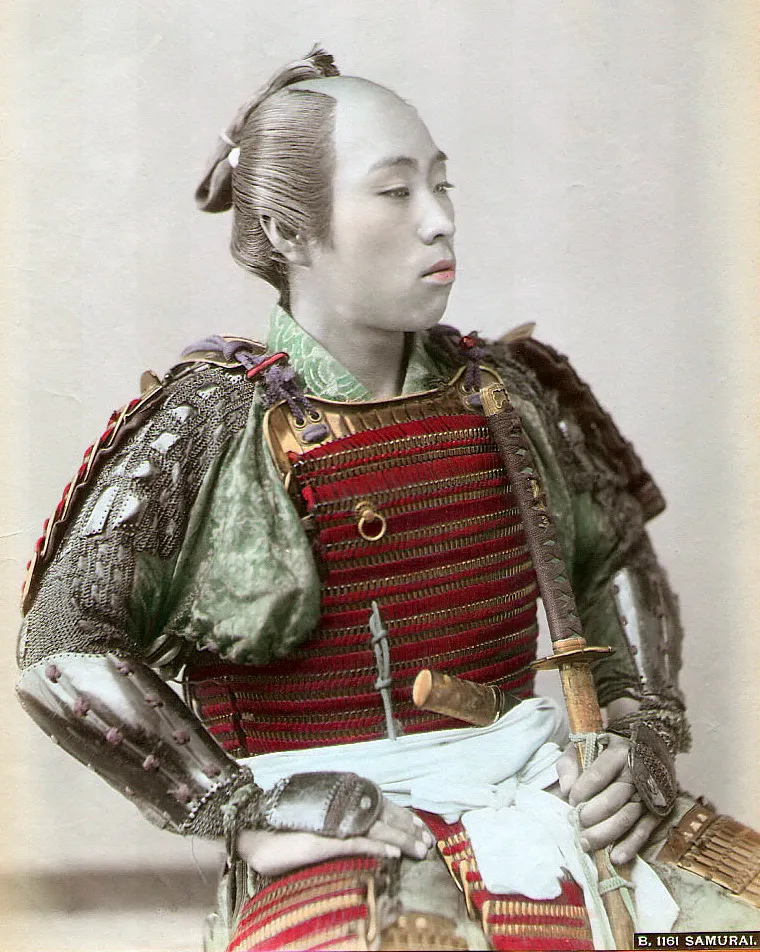
The Warrior's Boardroom: Ancient Bushido Principles That Are Reshaping Modern Corporate Leadership
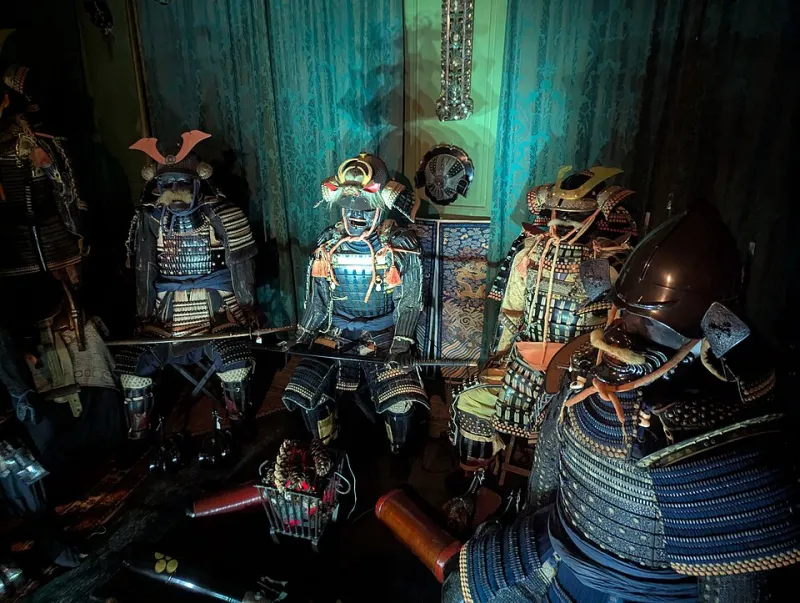
Photo: Tadeusz Hare, CC BY-SA 4.0, via Wikimedia Commons
The samurai did not simply fight. They governed, administered, counseled, and led. Across centuries of Japanese history, the warrior class was expected to embody a moral code so exacting that failure to uphold it was considered a form of death long before any blade was drawn. That code — Bushido, or "the way of the warrior" — prescribed seven foundational virtues: loyalty (chūgi), honor (meiyo), courage (yūki), benevolence (jin), respect (rei), honesty (makoto), and self-control (jisei).
Today, an unlikely community of American business leaders is studying those same virtues — not as historical curiosity, but as operational doctrine.
A Philosophy Built for Pressure
Bushido was never a peacetime luxury. It was designed to govern behavior under conditions of extreme stress, uncertainty, and consequence — precisely the environment that defines executive leadership in the twenty-first century. Management consultants who work with C-suite leaders have begun drawing explicit parallels between the samurai's ethical demands and the pressures faced by modern executives navigating market volatility, workforce expectations, and public scrutiny.
Dr. Marcus Hale, an organizational behavior specialist based in Chicago who has studied Japanese leadership models for over a decade, frames it plainly: "The samurai had to make life-or-death decisions with incomplete information, while simultaneously maintaining the trust of those who depended on them. That is not so different from what a CEO faces during a financial crisis or a product recall."
The resonance is not merely metaphorical. Several of Bushido's core principles map directly onto competencies that modern leadership frameworks — from Harvard Business School's adaptive leadership model to Simon Sinek's "Start With Why" philosophy — identify as essential to sustainable organizational success.
Loyalty Reimagined: Beyond the Org Chart
In feudal Japan, loyalty (chūgi) meant unwavering commitment to one's lord, often at personal cost. In a corporate context, the concept demands recalibration — but not abandonment. Progressive executives are reframing loyalty as a reciprocal obligation: the organization's duty to its employees, customers, and community, not merely the expectation of subordinate compliance.
Consider the example of Costco Wholesale, whose long-standing commitment to employee wages and benefits — consistently above industry norms — has generated remarkably low turnover rates and fierce workforce dedication. While Costco's leadership has never publicly invoked Bushido, the structural logic is identical: when those at the top demonstrate genuine loyalty downward, those below reciprocate with commitment that cannot be manufactured through incentive programs alone.
Samurai retainers who witnessed their lord's personal sacrifice fought with a ferocity that mercenaries could never match. The parallel in human resources is not subtle.
Honor and Accountability in the Age of Transparency
Perhaps no Bushido principle translates more directly to contemporary business than meiyo — honor — understood not as reputation management, but as the alignment between private conduct and public declaration. The samurai who spoke one way and acted another was not merely ineffective; he was considered morally corrupt.
In an era when corporate communications are scrutinized by journalists, activist investors, and social media audiences simultaneously, the gap between stated values and actual behavior has become devastatingly costly. The collapse of companies like Enron and, more recently, the reputational damage sustained by organizations caught misrepresenting their environmental or social commitments, illustrates what happens when leadership operates without the samurai's foundational insistence on integrity as a non-negotiable standard.
Leadership consultant Priya Nair, who advises mid-market companies across the Midwest, puts it directly: "The executives I work with who struggle most are those who have learned to perform accountability rather than practice it. The ones who build lasting cultures are those for whom honesty is simply not optional — even when it is expensive."
That description would have been immediately recognizable to any Edo-period daimyo evaluating the character of a retainer.
Courage That Costs Something
Bushido's conception of courage (yūki) was not recklessness. It was the disciplined willingness to act correctly in the face of genuine personal risk. For samurai, that risk was physical. For executives, it manifests differently — but no less consequentially.
Courage in the boardroom means making long-term investments when short-term pressures demand otherwise. It means delivering difficult assessments to boards, shareholders, or founders who do not wish to hear them. It means, on occasion, declining profitable opportunities that conflict with stated organizational values.
Satya Nadella's decision to fundamentally reorient Microsoft's culture upon becoming CEO in 2014 — dismantling a toxic internal ranking system and replacing it with a growth mindset framework — required exactly this kind of institutional courage. The results, visible in Microsoft's subsequent decade of sustained innovation and market growth, vindicate the samurai's insistence that true courage is not the absence of fear but the refusal to be governed by it.
Benevolence, Respect, and the Human Infrastructure of Organizations
The virtues of jin (benevolence) and rei (respect) are perhaps the most counterintuitive elements of Bushido for Western business audiences accustomed to associating warrior culture with severity and dominance. Yet historical scholarship on the samurai class consistently reveals that the most effective commanders were those who cultivated genuine concern for those beneath their authority.
This is not sentimentality. It is strategy. An army whose soldiers believe their commander values their lives fights differently than one whose soldiers expect to be treated as expendable. The same dynamic operates in every organization that has ever existed.
Research from Gallup's ongoing State of the Global Workplace studies consistently demonstrates that employees who feel respected and genuinely valued by their direct supervisors exhibit dramatically higher levels of engagement, productivity, and retention. The samurai understood this not through data analytics, but through the lived experience of command.
Self-Control: The Discipline Beneath the Discipline
Of all Bushido's tenets, jisei — self-control — may be the most demanding and the most consequential. The samurai who could not govern his own impulses, appetites, and emotional reactions was considered unfit for leadership regardless of his skill with a sword.
In executive contexts, self-control encompasses emotional regulation under pressure, the restraint to listen before responding, and the discipline to maintain long-term strategic focus when short-term noise threatens to dominate decision-making. These are not soft skills. They are the invisible infrastructure upon which every other leadership capacity rests.
The Way Forward
Bushido was never a perfect system. It emerged from a specific historical context shaped by feudal hierarchy, rigid social stratification, and values that would be rightly challenged by contemporary standards. Adopting it wholesale would be neither possible nor desirable.
But the seven virtues at its core — stripped of their historical specificity and examined for their enduring structural logic — offer American business leaders something increasingly rare: a coherent ethical framework that demands more of those who lead, not less. In an era when corporate culture has become a competitive differentiator and trust in institutions continues to erode, the ancient warrior's insistence on living and leading with integrity may prove to be not a relic, but a resource.
The way of the warrior was always about more than combat. It was about character. And character, as any seasoned executive will confirm, remains the most durable competitive advantage of all.