Honorable Defeat: What a Four-Century-Old Japanese Blade Teaches Americans About the Wisdom of Endurance Over Victory
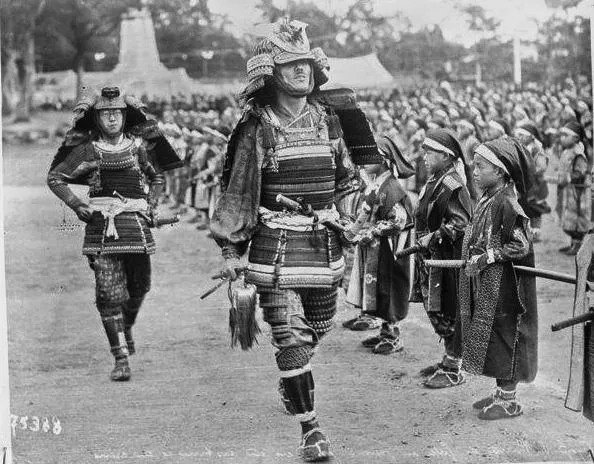
Photo: Unknown authorUnknown author, Public domain, via Wikimedia Commons
There is a particular kind of silence that falls over a person when they first hold a blade that has outlasted empires. The steel is cold, the temper line — the hamon — traces its irregular course like a river seen from altitude, and somewhere along the edge there are nicks, subtle deformations, the quiet signatures of encounters the sword did not entirely win. For most American observers, the instinct is to regard these marks as flaws. The Japanese tradition, with characteristic patience, suggests otherwise.
A sword of this age — four centuries of passage through war, inheritance, neglect, reverence, and rediscovery — does not speak the language of victory. It speaks something older and considerably more difficult: the language of continuation.
The American Mythology of the Unbroken Blade
To understand why such an object carries such philosophical weight for a contemporary American audience, it is necessary to first acknowledge the cultural framework through which most Americans encounter the concept of strength. From the earliest civic narratives — the frontier hero, the self-made entrepreneur, the championship athlete — the dominant metaphor has been one of unbroken ascent. Obstacles exist to be overcome. Defeat is a temporary condition, a prologue to eventual triumph. The broken thing is discarded; the perfect thing is celebrated.
This orientation is not without its virtues. It has propelled extraordinary individual and collective achievement. But it carries a shadow: a profound cultural discomfort with loss that does not resolve into victory, with damage that does not heal cleanly, with lives that accumulate scars without accompanying redemption arcs. The result, as therapists and cultural critics have increasingly noted, is a population uniquely ill-equipped to process impermanence — and uniquely susceptible to the psychological devastation of experiences that simply refuse to become triumphant stories.
Into this landscape, a four-hundred-year-old Japanese sword arrives as something of a provocation.
What the Swordsmith Understood That We Have Forgotten
The classical Japanese blade was never designed for invincibility. This is a point that surprises many who approach the katana through the lens of popular mythology, wherein it is frequently rendered as a near-supernatural instrument of perfect destruction. The historical reality is more nuanced and, ultimately, more instructive.
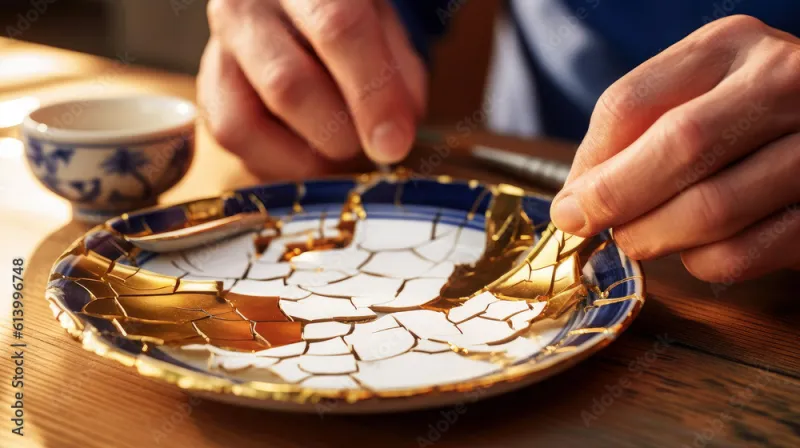
The swordsmith's art involved a deliberate negotiation between competing properties. A blade of pure hardness would shatter under lateral stress. A blade of pure flexibility would bend and fail to hold an edge. The folded steel construction — the lamination of tamahagane through repeated heating and working — was an attempt to hold these contradictions in productive tension, to create an object that could absorb force without fracturing, that could yield slightly without surrendering its essential nature.
This is not a metaphor that the smiths imposed upon their work. It is a structural reality that the philosophical tradition subsequently recognized and articulated. The sword that survives centuries does so not because it was impervious to damage, but because it was built to accommodate damage without losing coherence. The nicks along the edge are evidence of encounters absorbed. The subtle warp in an aged blade is the record of stresses metabolized rather than resisted to the point of breaking.
For a culture that has increasingly pathologized imperfection, this represents a genuinely foreign proposition.
Resilience Reconsidered: The Paradox of Purposeful Yielding
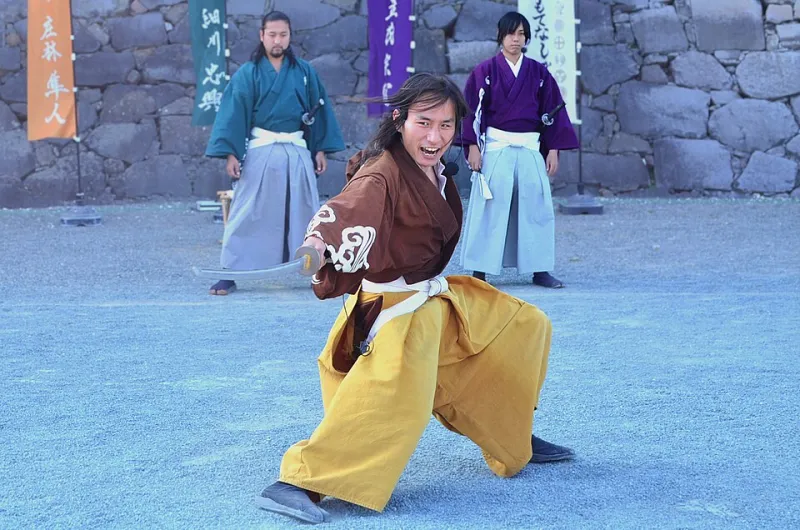
The Zen-influenced aesthetics that permeated samurai culture during the Edo period formalized what the blade itself demonstrated materially. Mono no aware — the bittersweet awareness of impermanence — was not a counsel of despair but a framework for authentic engagement with reality. To perceive the transience of things clearly was understood to deepen rather than diminish one's relationship to them. The cherry blossom is not diminished by its brevity; it is, in the Japanese aesthetic understanding, defined by it.
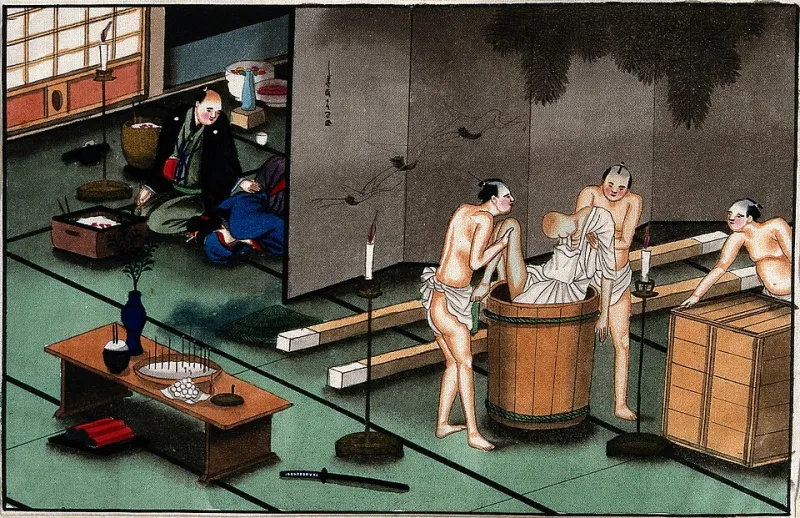
Applied to the warrior's relationship with defeat, this philosophy produced something that contemporary Americans are only beginning to recognize as psychologically sophisticated: a model of resilience that does not require the erasure of loss. The samurai tradition, at its most philosophically developed, did not ask its adherents to pretend that defeat had not occurred, or to reframe loss as a disguised victory. It asked something considerably more demanding — that one continue, with full awareness of what had been lost, without requiring that loss to resolve into gain.
This is the lesson that the damaged blade carries in its steel. It did not survive four centuries by pretending its nicks were not there. It survived because the structure beneath the damage remained coherent.
American Audiences at the Edge of the Blade
The growing American interest in Japanese sword culture — evident in the attendance figures at museum exhibitions, the expanding collector community, and the proliferation of documentary content exploring traditional tamahagane craft — is, on one level, an aesthetic and historical fascination. On another level, it appears to be something more personal.
Conversations within martial arts communities and among collectors frequently return to the same territory: the appeal of an object that carries its history visibly, that does not conceal its encounters, that has been used and damaged and survived without being sanitized. In a consumer culture that relentlessly replaces rather than repairs, that curates social presentation to exclude evidence of struggle, the aged blade offers an almost transgressive alternative image of value.
Perfectionism has become, in the clinical literature, one of the more reliably identified contributors to anxiety and depression in American adults. The impossible standard of the unbroken, undefeated self — the self that never publicly fails, never visibly struggles, never accumulates the kind of damage that cannot be explained away — exerts a considerable psychological toll. The warrior tradition encoded in classical Japanese steel does not offer an escape from this pressure so much as it offers a fundamentally different framework for understanding what strength actually requires.
The Weight of Continuation
There is a Japanese concept — gaman — that translates approximately as the endurance of the seemingly unbearable with dignity and without complaint. It is not a passive concept. It requires active internal work: the maintenance of composure and purpose in the face of circumstances that cannot be changed. It is, in the context of the damaged blade, the quality that keeps the steel coherent even as the edge accumulates its history of hard use.
For Americans navigating a cultural moment characterized by accelerating uncertainty — economic, social, environmental — the appeal of this framework is not difficult to understand. Not every contest can be won. Not every loss can be redeemed. Some periods of life are simply periods of endurance, and the question is not whether one will emerge victorious but whether one will emerge at all, and with what degree of integrity intact.
The four-hundred-year-old blade does not answer this question. It simply demonstrates, in cold steel and ancient temper lines, that continuation is possible. That damage is not the same as destruction. That the thing which has survived imperfectly is, in its own way, more instructive than the thing that never faced the test.
In the end, perhaps the most subversive lesson the Japanese warrior tradition offers American culture is not a technique, not a philosophy, not even a code of honor — but a simple, material proof that what endures is not always what prevailed. Sometimes, the most remarkable thing a blade can do is simply refuse to disappear.