Cracked Glaze, Crooked Grain: How Wabi-Sabi Is Quietly Revolutionizing American Craft
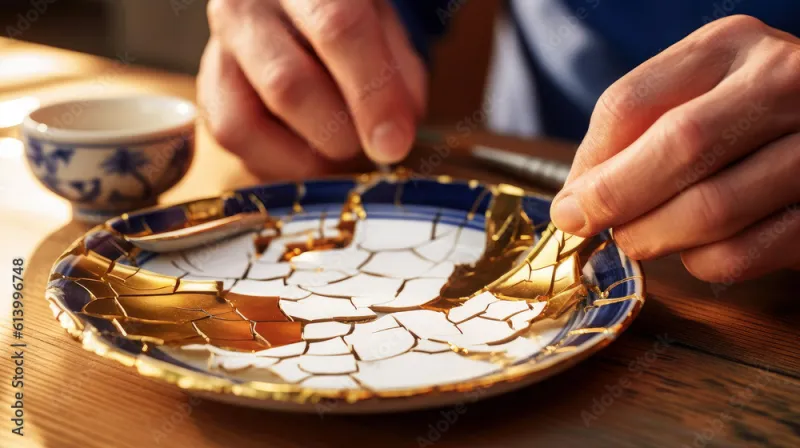
Photo: Japanese wabi-sabi ceramics cracked pottery kintsugi gold repair craft studio, via as2.ftcdn.net
There is a particular kind of bowl that sits on the shelf of a ceramicist in Asheville, North Carolina. Its rim is uneven. A hairline crack runs along one side, sealed with gold lacquer in the Japanese tradition of kintsugi. The glaze pooled unevenly during firing, leaving one quadrant darker than the rest. By the standards of most American craft markets, it would be considered a second — a piece set aside, discounted, perhaps quietly discarded.
It sold first. And for more than any other piece in the collection.
The ceramicist, who has been working clay for nearly two decades, was not surprised. "People kept coming back to it," she said. "They couldn't explain why. They just said it felt honest." That word — honest — appears with striking frequency when American craftspeople speak about their growing embrace of wabi-sabi, the ancient Japanese aesthetic philosophy that locates beauty not in flawlessness but in transience, irregularity, and the quiet dignity of things that bear the marks of time.
What Wabi-Sabi Actually Means — and What It Does Not
The term is frequently misappropriated in American wellness and interior design circles, where it has come to mean little more than "rustic chic" or a license to leave things pleasantly undone. This misreading does a disservice to a philosophy with genuine philosophical weight.
At its core, wabi-sabi draws from two distinct aesthetic concepts. Wabi originally referred to the loneliness and austerity of living apart from society — a kind of spare, unadorned existence. Over centuries, it evolved to describe a beauty found in simplicity, in the modest and the weathered. Sabi spoke to the passage of time, the patina of age, the way an object becomes more itself — more resonant — as it accumulates the evidence of its own history.
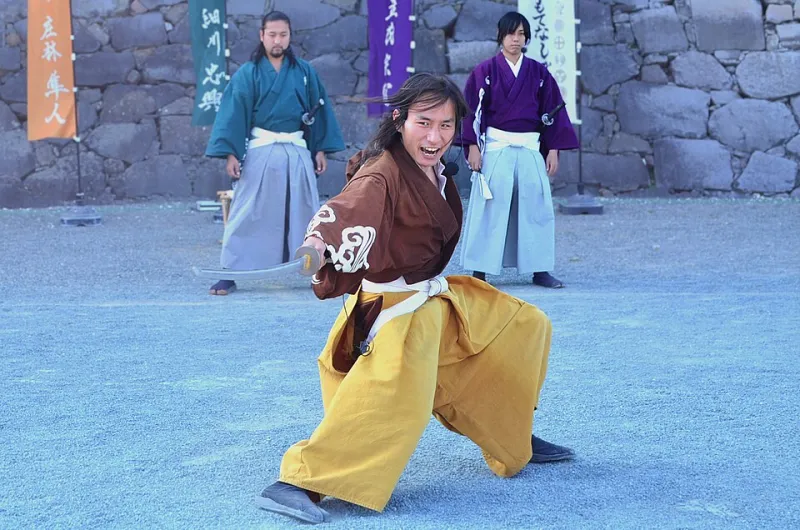
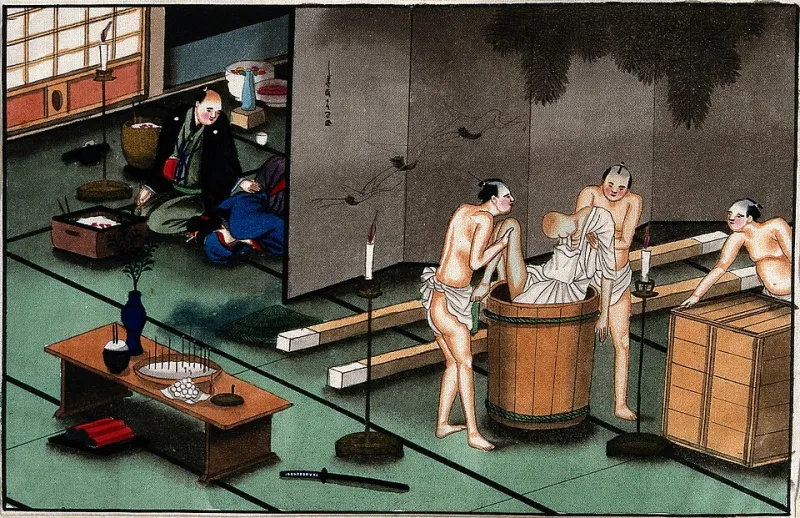
Together, they form an aesthetic worldview deeply intertwined with Zen Buddhism and, crucially for readers of this publication, with the warrior traditions of feudal Japan. The samurai's relationship with his blade was never one of sterile preservation. A sword used in earnest bore evidence of that use. The warrior himself, shaped by discipline and hardship, was not diminished by the marks of his training — he was defined by them. The philosophy was not confined to the tea house or the potter's studio. It lived in the dojo, in the forge, in the space between a master's correction and a student's next attempt.
Why American Craftspeople Are Listening Now
The timing of wabi-sabi's deeper penetration into American craft culture is not accidental. It arrives alongside a widespread, if not always articulate, exhaustion with the aesthetics of digital perfection. Instagram and Pinterest spent a decade training consumers — and creators — to value the immaculate: seamless grain, uniform glazes, symmetrical compositions, surfaces that appear untouched by human hands.
The reaction has been building for some time. Woodworkers began leaving hand-plane marks visible on finished surfaces. Potters stopped trimming their rims to machine-like evenness. Blacksmiths — particularly those working in the tradition of Japanese bladesmithing — began speaking openly about the value of the hamon, the temper line on a blade, as a record of the fire itself, a signature neither planned nor repeatable.
In martial arts studios from Portland to Atlanta, instructors have begun framing this philosophy explicitly in their teaching. The imperfect technique, corrected through repetition and honest self-assessment, is not a failure state to be concealed. It is the actual substance of training. The bruise, the callus, the form that still lists slightly left after three years of practice — these are not embarrassments. They are evidence of genuine engagement.
The Forge as Philosophical Classroom
Perhaps nowhere is wabi-sabi's relevance more viscerally apparent than in the world of traditional bladesmithing, an art form that has attracted a devoted American following over the past two decades. The tamahagane — the steel produced in a traditional Japanese tatara furnace — is, by modern metallurgical standards, inconsistent. Its carbon content varies. It contains impurities. Contemporary steel mills could produce a more chemically uniform product without effort.
And yet the blades produced from tamahagane by skilled smiths are among the most revered objects in the world of edged tools. The inconsistency is not incidental. The variation in carbon distribution is precisely what allows a skilled smith to fold and work the steel in ways that create the distinctive jihada — the grain pattern of the blade's surface — that collectors and martial artists have admired for centuries. The impurity, managed with knowledge and intention, becomes the source of the object's singular character.
American bladesmiths who have trained in Japanese traditions speak of this with a reverence that borders on the devotional. The steel does not simply obey. It responds, resists, surprises. The smith who approaches the forge expecting to impose his will entirely upon the material will be consistently disappointed. The smith who learns to collaborate with the material's own nature — including its flaws — produces something that could not have been designed in advance.
This is wabi-sabi not as decoration but as epistemology: a way of knowing that begins with humility before the material world.
The Counterculture That Isn't Performing
What distinguishes the current American engagement with wabi-sabi from previous waves of Japanese aesthetic influence is its apparent sincerity. Earlier adoptions — the mid-century enthusiasm for Zen gardens, the 1980s corporate appropriation of Japanese management philosophy — tended toward the superficial. They borrowed the vocabulary without the underlying discipline.
The craftspeople and martial artists driving the present movement seem, by and large, to be doing the harder work. They are reading the primary sources. They are traveling to Japan to train. They are sitting with the discomfort of producing work that their own culture's market may not immediately reward. A woodworker in Vermont who leaves the natural edge of a slab intact, including its cracks and voids, is making a choice that requires him to explain that choice to customers accustomed to the seamless.
That explanation, repeated across thousands of studios and workshops and dojos, is slowly shifting the terms of the conversation. What counts as mastery? What does a finished object owe to the process that produced it? Can a thing be excellent and imperfect simultaneously — and might those qualities, in fact, be inseparable?
A Philosophy That Was Always About Endurance
The samurai traditions that inform this publication have always understood something that consumer culture struggles to accommodate: that the most durable things are not the most pristine. A blade that has been used, maintained, and repaired across generations carries a history that a blade still in its original polish does not. The warrior who has been genuinely tested is not the same as the warrior who has only trained under controlled conditions. The difference is not cosmetic.
Wabi-sabi, understood properly, is not a permission slip for carelessness. It is a demand for a different kind of rigor — one that requires the maker to be present enough to recognize when an imperfection is the work speaking its own truth, and disciplined enough to know when it is simply a mistake. That distinction is not always easy to make. It requires exactly the kind of sustained, honest attention that the warrior traditions have always demanded.
For American craftspeople still finding their footing in this philosophy, that difficulty is, perhaps, the most Japanese thing about it.