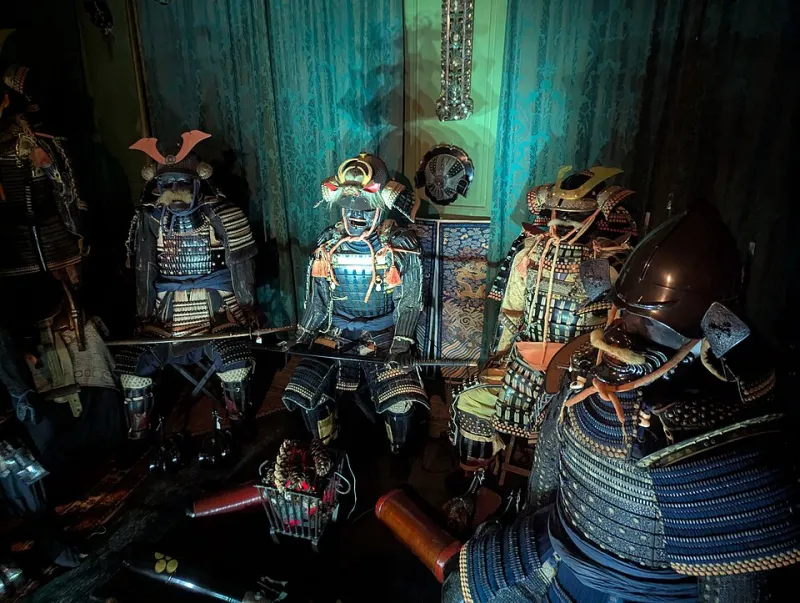
Choreography vs. Combat: Why Hollywood's Samurai Fights Are Beautiful Lies — And What Authentic Steel Actually Looked Like
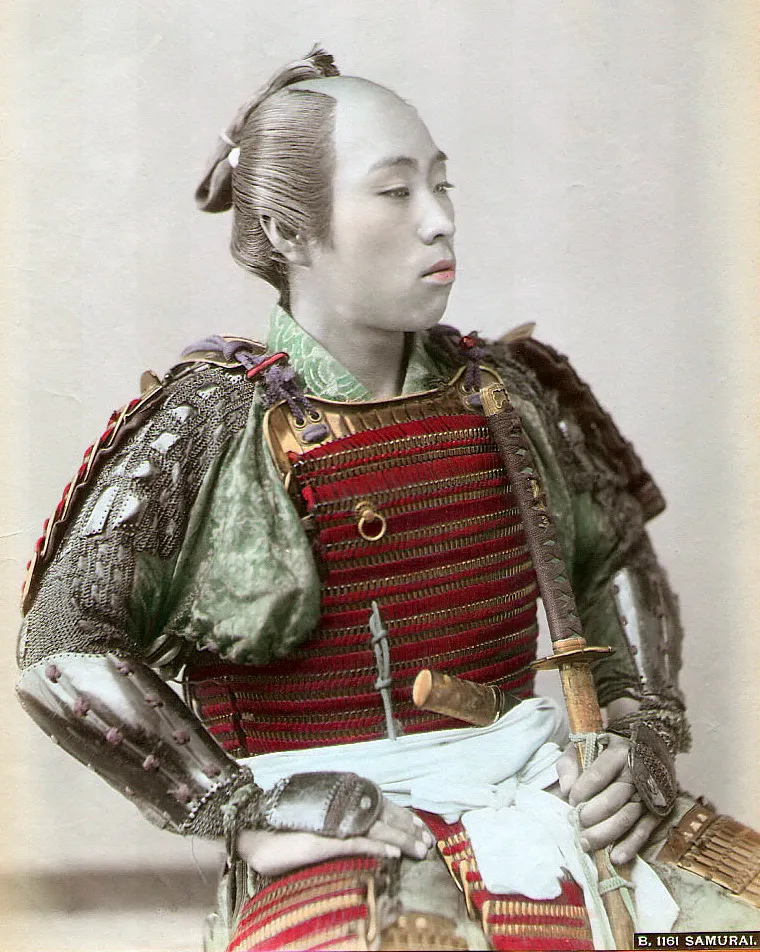
Photo: not listed, Public domain, via Wikimedia Commons
The image is immediately familiar to any American moviegoer: two figures in elaborate armor circling each other beneath a storm-darkened sky, katanas gleaming, exchanging a prolonged sequence of parries, counters, and spinning strikes before one delivers the decisive blow in a burst of cinematic flourish. It is visually arresting. It is emotionally satisfying. And according to those who have spent their lives studying authentic Japanese swordsmanship, it bears only a passing resemblance to how samurai actually fought.
The divergence between Hollywood's samurai and the historical record is not merely an academic concern. For millions of American viewers whose primary — and often sole — exposure to Japanese warrior culture comes through film and streaming content, cinematic depictions function as de facto history lessons. When those depictions are systematically inaccurate, the cultural cost extends well beyond factual error.
The Myth of the Prolonged Duel
Perhaps the most pervasive Hollywood convention is the extended sword duel — two combatants locked in sustained, elaborate exchange for minutes at a time. It is dramatically effective. It is also historically improbable.
Historical accounts of actual samurai engagements, drawn from period sources including the Hagakure and various domain military records, consistently describe decisive encounters as brief, explosive, and frequently resolved in a single exchange. Kenjutsu — the classical Japanese art of swordsmanship — was engineered for lethality, not longevity. Practitioners trained to end confrontations as rapidly and definitively as possible, because in genuine combat, prolonged engagement multiplied the opportunities for catastrophic injury.
Kenjutsu instructor and koryu practitioner James Ohara, who has trained in traditional Japanese sword arts for over twenty years and operates a dojo in the Pacific Northwest, explains the disconnect clearly: "Real sword fighting is terrifying precisely because it is so fast and so final. There is no room for the elaborate back-and-forth you see on screen. The training is about identifying and exploiting a single decisive moment — not sustaining a performance."
Hollywood's extended duels, by contrast, are choreographic performances designed to maximize screen time, showcase performer athleticism, and build emotional tension through duration. These are legitimate filmmaking goals. They simply have little to do with historical swordsmanship.
The Katana Problem
Another area of persistent cinematic distortion involves the katana itself — the curved, single-edged sword that has become the universal symbol of samurai identity in Western popular culture. Films routinely depict samurai relying exclusively on the katana in virtually every combat context, treating it as an all-purpose weapon of near-supernatural capability.
The historical record is considerably more nuanced. While the katana held profound cultural and ceremonial significance for the samurai class, battlefield engagements during Japan's warring periods frequently featured a far broader arsenal. The naginata (a pole-mounted blade), the yari (spear), and the bow were primary weapons in large-scale engagements, with the sword often serving as a secondary or last-resort implement rather than a first choice.
Dr. Kenji Watanabe, a scholar of Japanese military history affiliated with a university research center in California, notes that the cinematic fixation on the katana reflects Western romanticism more than historical practice: "The image of the lone samurai with his sword became enormously powerful in postwar Japanese cinema, and Hollywood absorbed and amplified that image. But it was always a cultural construction — a symbol of the warrior's spirit — rather than a straightforward documentary record of how battles were fought."
The distinction matters because it shapes public understanding of what samurai actually were: not solitary sword-wielding heroes, but members of a professional military class operating within complex tactical systems.
Wire Work, Acrobatics, and the Fantasy of Aerial Combat
The influence of Hong Kong action cinema on Hollywood's samurai depictions introduced another layer of historical distortion: the acrobatic, wire-assisted aerial combat sequence. Films produced since the late 1990s have increasingly incorporated leaping, spinning, and gravity-defying movement into samurai fight choreography, borrowing visual vocabulary from wuxia traditions that have entirely different cultural and historical origins.
Stunt coordinator and martial arts consultant Derek Yuen, who has worked on several major studio productions featuring East Asian combat sequences, acknowledges the creative logic while identifying its historical cost: "Wire work and acrobatics read as spectacular on camera, and audiences have been conditioned to associate them with 'Asian martial arts' generically. But classical Japanese sword arts are grounded — literally. The stances are low and stable. The footwork is deliberate. Everything is designed to maintain balance and structural integrity, not to launch you into the air."
Authentic kenjutsu and its descendant art, kendo, emphasize precisely the opposite of cinematic acrobatics: stillness, economy of movement, and the cultivation of zanshin — a state of sustained, composed awareness that persists before, during, and after any exchange. The spectacularly mobile samurai of Hollywood action cinema would likely have been assessed by historical practitioners as dangerously overextended.
Films That Earned Their Respect
The critique of Hollywood's samurai representations should not obscure the genuine achievements of filmmakers who have approached the subject with rigor and respect. Akira Kurosawa's foundational works — Seven Samurai, Yojimbo, and Sanjuro among them — remain benchmarks of authentic period representation, informed by the director's meticulous historical research and his collaboration with practitioners of traditional sword arts.
More recently, the 2020 PlayStation game adaptation Ghost of Tsushima — while technically a gaming property — generated significant discussion for its visual and atmospheric fidelity to historical Kamakura-period Japan, demonstrating that American creative teams can achieve meaningful authenticity when they invest in genuine scholarly consultation.
In the streaming space, the 2024 FX series Shōgun drew widespread praise from historians and martial arts practitioners for its careful attention to period-accurate combat posture, tactical logic, and the cultural context that surrounded samurai violence — treating it as a grave and consequential act rather than an occasion for visual spectacle.
"What Shōgun did well," notes Ohara, "was show that fighting was the last resort of a trained professional, not the first. The tension came from everything surrounding the violence, not from the choreography itself. That is actually much closer to the historical reality."
Why the Difference Matters
The case for historical accuracy in samurai cinema extends beyond the preferences of martial arts enthusiasts and academic specialists. For Japanese Americans and the broader Japanese diaspora in the United States, cinematic representations of their cultural heritage carry genuine social weight. Systematic distortion — however visually entertaining — contributes to a flattened, exoticized perception of a sophisticated historical culture, reducing centuries of complex social, philosophical, and military development to a collection of stylized aesthetic tropes.
There is also a practical dimension. Interest in traditional Japanese martial arts in the United States has grown steadily over the past two decades, with kendo, iaido, and koryu schools reporting increased enrollment from students initially drawn to the subject through film and television. When those students arrive with expectations shaped by Hollywood choreography, instructors face the additional challenge of dismantling deeply ingrained misconceptions before genuine learning can begin.
The samurai were not performers. They were professionals operating within a demanding ethical and tactical framework that rewarded precision, composure, and decisiveness over spectacle. Cinema that honors that reality does not merely satisfy historians — it offers audiences something rarer and ultimately more compelling than choreographic fantasy: an encounter with what these warriors actually were.
The steel was real. The spirit was real. The way of the warrior deserves a portrayal worthy of both.