New Roots, Ancient Code: How a Generation of American Martial Artists Is Reshaping What Bushido Means
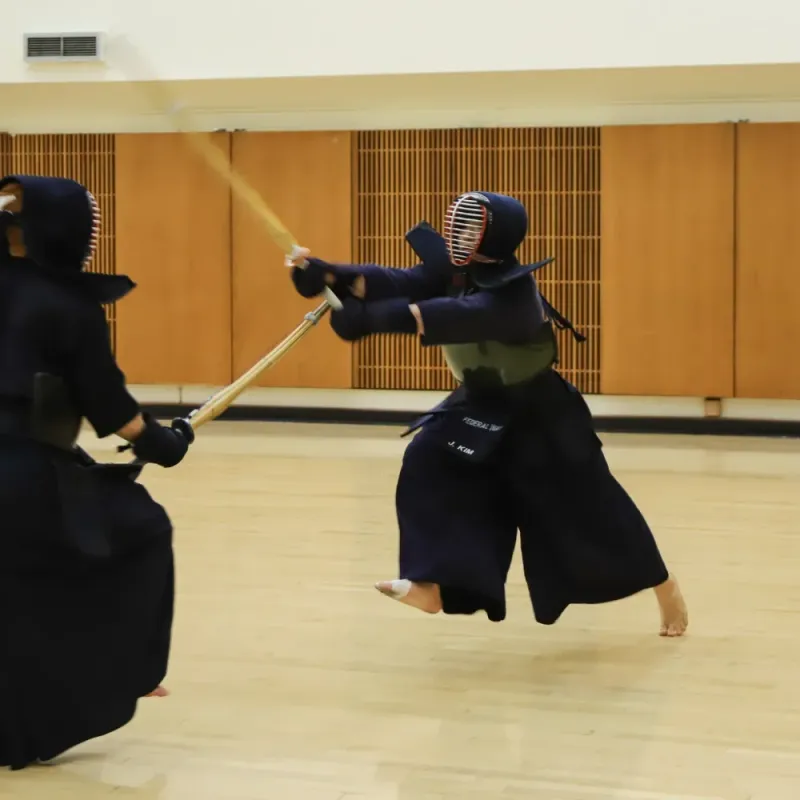
Photo: diverse kendo martial arts students training dojo American, via itallhappenshere.org
In a converted warehouse in East Austin, Texas, a kendo instructor named Miriam Castellano is running a class that would be difficult to imagine in a nineteenth-century Japanese training hall. Her students range in age from sixteen to fifty-three. Several use wheelchairs. One is a bilateral amputee who has developed a modified grip technique that her instructor describes, without hyperbole, as genuinely innovative. The shinai — the bamboo practice sword — is in every hand in the room, adapted where necessary, but present.
"Budo is not about physical uniformity," Castellano says after class, still wearing her bogu armor. "It never was, if you read the source material carefully. The philosophical core of these traditions is about cultivating the self through disciplined practice. The specific body doing that practice is secondary to the intention behind it."
This conviction — that the spirit of samurai philosophy can migrate across bodies, cultures, and centuries without losing its essential character — is increasingly central to how American martial artists engage with Japanese warrior traditions. It is also, depending on whom you ask, either the natural evolution of a living system or a well-intentioned distortion of something that requires its original context to remain coherent.
The Question of Transplantation
Bushido, as most Americans encounter it, is a synthesis — part feudal code, part Meiji-era literary construction, part popular mythology refined through decades of cinematic interpretation. The text most frequently cited as its foundational document, Inazo Nitobe's Bushido: The Soul of Japan, was published in 1900 and written in English for a Western audience. The irony is not lost on contemporary scholars: the version of samurai philosophy that most powerfully shaped American perception was itself a cross-cultural translation from its moment of origin.
Dr. Sandra Okafor, who teaches East Asian philosophy at a university in the Chicago area and holds a second-degree black belt in iaido, considers this history important context for evaluating contemporary American interpretations. "We are not the first generation to adapt these ideas across cultural lines," she observes. "Nitobe was doing something similar. The question is not whether adaptation occurs — it always does — but whether the adaptation retains integrity with the values it claims to carry forward."
For Okafor, integrity means sustained engagement with primary sources, rigorous technical training, and a willingness to acknowledge the limits of one's own cultural vantage point. "American practitioners who have done the work — who have trained for decades, studied the classical texts in translation, and maintained relationships with Japanese teachers and institutions — have earned the right to contribute to the living tradition. Those who have not done that work but claim authority are a different matter."
Disability, Inclusion, and the Redefinition of Warrior Virtue
Castellano's adaptive kendo program in Austin is part of a broader movement that has gained momentum in recent years, particularly as national and international kendo federations have begun exploring pathways toward Paralympic recognition. The All United States Kendo Federation has published guidance on accommodating practitioners with physical disabilities, and several regional clubs have developed specialized curricula.
The philosophical implications of this expansion are significant. Traditional kendo pedagogy emphasizes the unity of mind, sword, and body — a triad in which physical capability has historically been assumed rather than interrogated. Adaptive practitioners and their instructors are, by necessity, rearticulating what that unity means when the body in question does not conform to historical norms.
Castellano's amputee student, who asked to be identified only by her training name, Takamura, describes her experience with characteristic directness. "When I started, I had to figure out everything myself because there was no template. My sensei was willing to learn alongside me, which is not something every instructor would do. What I found is that the mental discipline — the zanshin, the awareness, the commitment to each technique — those things don't require two hands. They require a particular quality of attention. That part of the tradition is completely intact in my practice."
Feminist Readings of the Warrior Code
The relationship between bushido and gender is complicated by history on multiple fronts. The onna-bugeisha — female warriors who appear throughout Japanese history — have received renewed scholarly and popular attention in recent years, offering American practitioners a historical basis for reclaiming space within traditions that have sometimes been presented as exclusively masculine in character.
Amanda Reyes, a certified instructor in both naginatajutsu and iaido who operates a dojo in Portland, Oregon, has written and lectured extensively on what she terms "the recovery project" — the effort to excavate the female dimensions of Japanese warrior culture that were systematically minimized during the Meiji period's ideological reconstruction of samurai identity.
"The naginata was historically the weapon of the female warrior and the defender of the household," Reyes explains. "It was taught to women of samurai families as a matter of practical necessity. The notion that budo is inherently male is a relatively recent historical construction, not an ancient truth. Recovering that context is not a feminist imposition on tradition — it is fidelity to a more complete version of the tradition."
Reyes is careful to distinguish this historical recovery from what she regards as less defensible forms of appropriation. "There is a difference between expanding the tradition by returning to sources it had suppressed and simply grafting contemporary ideology onto historical practice and calling it authentic. I try to hold that line seriously."
Generation Z and the Challenge to Hierarchy
Perhaps the most energetic disruption of traditional martial arts culture is coming from the youngest cohort of American practitioners, who bring to the dojo a generational skepticism toward institutional hierarchy that frequently collides with the formalized seniority structures that Japanese martial arts have historically maintained.
The tension is real and, according to many instructors, productive when handled with care. Marcus Webb, a twenty-four-year-old kendo practitioner and assistant instructor in Atlanta, describes the dynamic from his position between generations. "A lot of people my age come in with questions that older students were trained not to ask — why does this technique work, what is the reasoning behind this protocol, what happens if we try it differently. Some instructors find that threatening. Others find it energizing."
Webb's own sensei, a sixty-one-year-old practitioner who has trained in Japan on multiple extended residencies, has made a deliberate choice to engage those questions rather than suppress them. "The classical tradition includes a concept called shu-ha-ri — follow the rule, break the rule, transcend the rule," the instructor explains. "The problem is that many students want to jump to 'break' before they have genuinely mastered 'follow.' My job is to make sure the foundation is solid before the experimentation begins. But the experimentation itself? That is how any living art survives."
What the Tradition Requires
For all the creative ferment occurring in American dojos, the most thoughtful practitioners across every demographic tend to converge on a common principle: genuine engagement with samurai philosophy requires sustained effort that no amount of enthusiasm or ideological commitment can substitute for.
Castellano, Okafor, Reyes, and Webb all emphasize — in different vocabularies and from different vantage points — that the transformative power of these traditions is inseparable from the discipline they demand. The philosophical insights do not arrive as concepts to be understood and then applied. They arrive, if they arrive at all, through the accumulated weight of thousands of hours of practice.
That insistence on rigor is, perhaps, the most authentically samurai dimension of the American conversation. The code has always asked more of its adherents than admiration. It has asked demonstration — in the training hall, in daily conduct, and in the willingness to continue when continuation is difficult. On that point, at least, the ancient and the contemporary appear to agree.