The Transmission That Cannot Be Downloaded: Why the Sensei-Student Relationship Endures in an Era of Digital Shortcuts
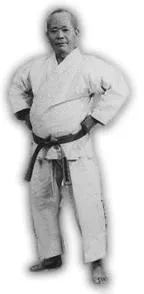
Photo: Shotokanryu, CC BY-SA 3.0, via Wikimedia Commons
There is a moment familiar to anyone who has trained seriously in a traditional martial art — the instant a sensei's hand corrects your grip, not with words, but with silent, precise pressure. The adjustment lasts perhaps two seconds. It is not recorded. It cannot be replayed. Yet it restructures something in the body and, if the student is paying attention, in the mind as well. This is densho in its most elemental form: the living transmission of knowledge from one human being to another. And it is precisely this transmission that the digital age, for all its extraordinary convenience, cannot replicate.
Across the United States, established dojos are navigating a peculiar cultural moment. Enrollment inquiries frequently arrive from prospective students who have spent months — sometimes years — absorbing YouTube tutorials, following martial arts influencers on Instagram, and completing subscription-based online courses. They arrive with a vocabulary, a visual literacy, even a practiced imitation of technique. What they often lack, instructors note with a mixture of patience and concern, is the thing that only sustained human mentorship can provide.
The Ancient Covenant of the Dojo
The sensei-student relationship in Japanese martial tradition was never simply a transaction between instructor and paying client. It was, at its most serious, a covenant — one that placed mutual obligations on both parties and that unfolded across years, sometimes decades. The student owed the sensei sincere effort, humility, and loyalty. The sensei owed the student honest assessment, genuine care, and the willingness to transmit not merely technique but the underlying principles that give technique its meaning.
This structure was not incidental to the martial arts. It was, in many respects, the point. The samurai of feudal Japan understood that combat skill divorced from moral formation was simply violence. The dojo was the environment in which both were cultivated simultaneously, and the sensei was the irreplaceable figure who held that environment together. The ryu — the school or lineage — survived precisely because knowledge passed through this intimate human chain, not through manuscripts alone.
American martial arts culture has long admired this model, even when it has struggled to fully embody it. The golden era of American karate and judo in the mid-twentieth century produced instructors who had trained directly under Japanese masters, and who understood, often viscerally, what that lineage demanded. Many of today's most respected American dojos trace their philosophical DNA to that period of earnest transmission.
What the Screen Cannot Correct
The rise of digital martial arts content is not, in itself, a development to be dismissed. Access to high-quality instructional video has genuinely democratized exposure to styles and traditions that might otherwise remain geographically inaccessible to students in rural America or underserved communities. A teenager in rural Montana who discovers a passion for Okinawan kobudo through an online video is encountering something real and potentially transformative.
The problem arises when digital exposure is mistaken for digital mastery — when the consumption of content substitutes for the accumulation of supervised hours on the mat. A screen cannot feel the tension in your shoulders before a technique collapses. It cannot read the hesitation in your eyes before a sparring exchange and offer the precise word that transforms hesitation into composure. It cannot hold you accountable to a standard that rises incrementally as your capacity rises.
Instructors at dojos across the country — from a traditional Shotokan school in Chicago's North Side to a kenjutsu program in the San Francisco Bay Area — describe a consistent pattern: students shaped primarily by online content frequently exhibit a curious inversion of competence. Their vocabulary exceeds their embodied understanding. They can describe a principle with confidence but execute it with significant errors they cannot perceive without external correction. The screen, by its nature, reflects only what the student wishes to see.
The Pedagogy of Discomfort
Authentic mentorship in the martial arts has always involved a dimension that modern consumer culture finds uncomfortable: the deliberate withholding of praise, the strategic introduction of difficulty, and the occasional experience of productive failure. A skilled sensei does not merely teach the student what they wish to learn. The sensei teaches what the student needs — and these are frequently different things.
This pedagogical philosophy has deep roots in Japanese tradition. The concept of shugyo — austere, demanding practice undertaken for the purpose of forging character — presupposes a teacher who knows the student well enough to calibrate that demand appropriately. Too little challenge produces stagnation. Too much produces injury or abandonment. The calibration is an art in itself, one that requires intimate knowledge of the individual student's psychology, physical condition, and stage of development.
No algorithm, however sophisticated, possesses this knowledge. An online platform knows what content a user has watched and for how long. It does not know that the user is compensating for a childhood injury with a subtle postural habit that will eventually produce a dangerous mechanical failure under pressure. It does not know that the user's apparent confidence conceals a profound anxiety about physical contact that must be addressed before genuine martial competence can develop.
The Generational Question
Dojos that have successfully navigated this cultural shift tend to share a common approach: they welcome students who arrive with digital backgrounds while being transparent about what that background does and does not provide. Rather than dismissing online learning, they contextualize it — acknowledging its value as an introduction while making clear, through direct experience on the mat, what it cannot replace.
This requires a particular kind of patience from instructors, and a particular kind of honesty with students. The conversation is not always comfortable. Telling a motivated adult who has invested significant time and money in online courses that they are, in certain fundamental respects, beginning again is a delicate matter. The best sensei manage this not through discouragement but through demonstration — allowing the student to feel, in their own body, the difference between what they knew before and what they are now learning.
The students who stay, instructors consistently report, tend to become the most committed practitioners the dojo produces. The experience of discovering what they did not know — and discovering it through a relationship with a human teacher rather than a platform — creates a quality of humility and dedication that is difficult to manufacture by other means.
What Endures
The sensei-student bond, at its deepest, is not primarily about the transfer of technical information. It is about the formation of a certain kind of person — one who understands that genuine mastery requires sustained vulnerability, honest self-assessment, and the willingness to be corrected by someone who knows more than you do. These are qualities that the warrior traditions of Japan considered essential not merely for combat, but for a life lived with integrity.
In an era that prizes autonomy, instant feedback, and the frictionless acquisition of skills, this model of learning can appear inconvenient, even antiquated. It is neither. It is simply demanding in the ways that matter most. The dojo floor, the watching eye of the sensei, the accumulated hours of supervised repetition — these are not obstacles to authentic martial knowledge. They are the conditions under which authentic martial knowledge becomes possible.
Some transmissions cannot be compressed into a file. Some things must be passed hand to hand.