When the Warrior Weeps: What Trauma Therapists Are Discovering in the Samurai's Ancient Psychology of Pain
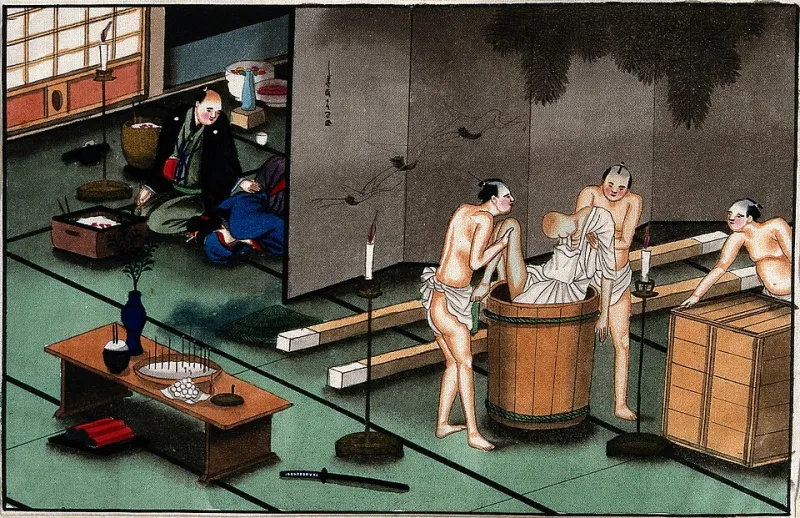
Photo: Unknown, CC BY 4.0, via Wikimedia Commons
There is a moment in certain therapy sessions—described by multiple clinicians working in veterans' care, first-responder support, and complex trauma recovery—when a patient arrives not with a diagnosis, but with a framework. They carry it quietly, sometimes apologetically. The framework is not drawn from a DSM manual or a cognitive behavioral workbook. It comes from Hagakure, from the Zen philosophy embedded in kenjutsu training, or from years spent in a dojo where suffering was not pathologized but assigned meaning.
The question that a growing number of American mental health professionals are beginning to ask—carefully, with appropriate clinical skepticism—is whether those patients are onto something.
The Vocabulary of Purposeful Suffering
Samurai culture, at its philosophical depth, was never simply about violence. The warrior class of feudal Japan developed an elaborate inner architecture for managing the psychological weight of a life lived adjacent to death. Concepts such as mono no aware—the bittersweet awareness of impermanence—and munen musō, the cultivation of a mind undisturbed by fear or attachment, were not decorative philosophies. They were functional technologies for surviving psychological extremity.
Dr. Rachel Nguyen, a licensed clinical psychologist specializing in combat trauma at a VA-affiliated practice in Northern Virginia, began noticing the pattern several years ago. "A meaningful portion of my veteran patients who were engaging in Japanese martial arts—iaido, kendo, even more contemporary practices—were demonstrating what I can only describe as a pre-adapted vocabulary for certain trauma concepts," she explains. "They already understood, in an embodied way, that pain does not have to be the enemy. The dojo had taught them that."
This is not, she is careful to clarify, a clinical endorsement of replacing evidence-based treatment with warrior philosophy. "What I observed was that the cultural and philosophical exposure created a kind of scaffolding. It made certain therapeutic conversations easier to enter."
Acceptance Without Surrender
The intersection that most consistently draws clinical interest is the relationship between samurai thought and what modern psychology calls acceptance-based interventions—most prominently Acceptance and Commitment Therapy, or ACT. Developed by psychologist Steven Hayes in the 1980s, ACT centers on the premise that psychological suffering is intensified, not resolved, by the human instinct to avoid or suppress painful internal experiences. The therapeutic goal is not the elimination of pain but a fundamental shift in one's relationship to it.
Scholars of Japanese warrior culture will recognize the structural echo immediately. The samurai tradition, particularly as filtered through Zen Buddhism, held that resistance to suffering—the insistence that things ought to be otherwise—was itself a primary source of anguish. The warrior was not asked to be invulnerable. He was asked to be present within his vulnerability without being destroyed by it.
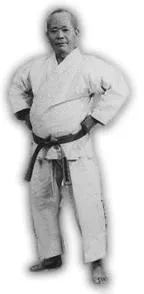
"When I explain the ACT model of psychological flexibility to patients who have martial arts backgrounds, there is often this moment of recognition," says Marcus Ellison, a trauma-focused therapist and longtime practitioner of Shotokan karate based in Portland, Oregon. "They say, 'That's what we call zanshin.' Remaining fully aware, fully present, even after the strike has landed. It maps remarkably well."
The Problem With Romanticization
Honesty demands that the complications be addressed with equal weight.
The samurai tradition, for all its philosophical richness, was also a system that demanded emotional suppression, enforced rigid hierarchies, and in its most extreme expressions, normalized self-destruction through the ritual of seppuku. To extract its most luminous philosophical concepts while discarding its more troubling social realities is a form of selective reading—one that American popular culture has indulged with particular enthusiasm.
Dr. Nguyen is direct on this point. "There is a real risk of using warrior mythology to encourage patients—particularly male patients, particularly veterans—to aestheticize their suffering rather than process it. 'Endure like a samurai' can become another way of saying 'don't feel what you're feeling.' That is the opposite of what trauma recovery requires."
The distinction, she argues, lies in the difference between meaning-making and suppression. Samurai philosophy at its most sophisticated was genuinely concerned with the former. The warrior was not trained to deny grief but to locate it within a larger framework of purpose and impermanence. Whether that distinction survives translation into a modern therapeutic context—stripped of the cultural, religious, and community structures that originally gave it coherence—is a question that does not resolve easily.
The Body as Archive
Perhaps the most compelling convergence between warrior tradition and contemporary trauma science occurs not in the realm of philosophy but in the realm of the physical. Modern trauma research, particularly the work associated with Dr. Bessel van der Kolk and the somatic experiencing movement, has increasingly established that trauma is not merely a cognitive or emotional phenomenon. It is stored in the body—in patterns of tension, breath, and movement—and must, in some measure, be addressed through the body.
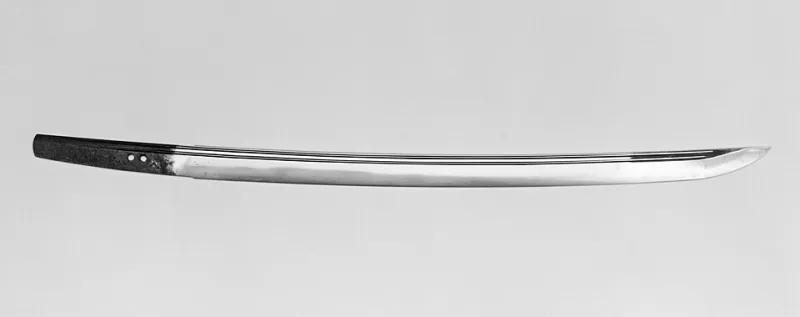
The samurai understood this intuitively, though they would not have framed it in neurological terms. The repetitive physical disciplines of sword training, archery, and horsemanship were not only combat preparation. They were practices of regulation—ways of teaching the nervous system to move through states of high arousal and return to stillness. The form was the therapy.
James Hattori, a nidan in iaido who works as a peer support specialist for a first-responder mental health program in Chicago, has observed this dynamic in his own recovery from occupational trauma. "There were things I could not talk through in a therapy session that I could somehow move through on the mat," he says. "The kata gave me a structure. The blade gave me something to be responsible to. That sense of responsibility was what I had lost, and training gave it back."
Neither Prescription Nor Dismissal
What emerges from a careful examination of this territory is not a clean conclusion but a more nuanced invitation. The samurai frameworks that are drawing clinical attention are not, in themselves, therapeutic protocols. They are cultural artifacts that, under certain conditions and for certain individuals, appear to provide genuine psychological resources—a language for impermanence, an embodied relationship with discomfort, a sense of purposeful identity that trauma so often strips away.
The mental health professionals engaged with this question are largely agreed on one point: the value lies not in wholesale adoption of warrior mythology, but in what that mythology, at its most philosophically rigorous, was actually pointing toward. The samurai did not pretend that the wound was not there. They asked what the wound was for.
In an American therapeutic culture that has perhaps overcorrected toward the language of victimhood and pathology—without always providing adequate frameworks for meaning, agency, or the dignified endurance of irreducible pain—that question may carry more clinical weight than it initially appears.
The warrior, it turns out, was not asking his students to be unbreakable. He was asking them to understand what breaking meant, and to continue walking forward regardless.
That, at least, is something both the dojo and the therapy room might agree upon.